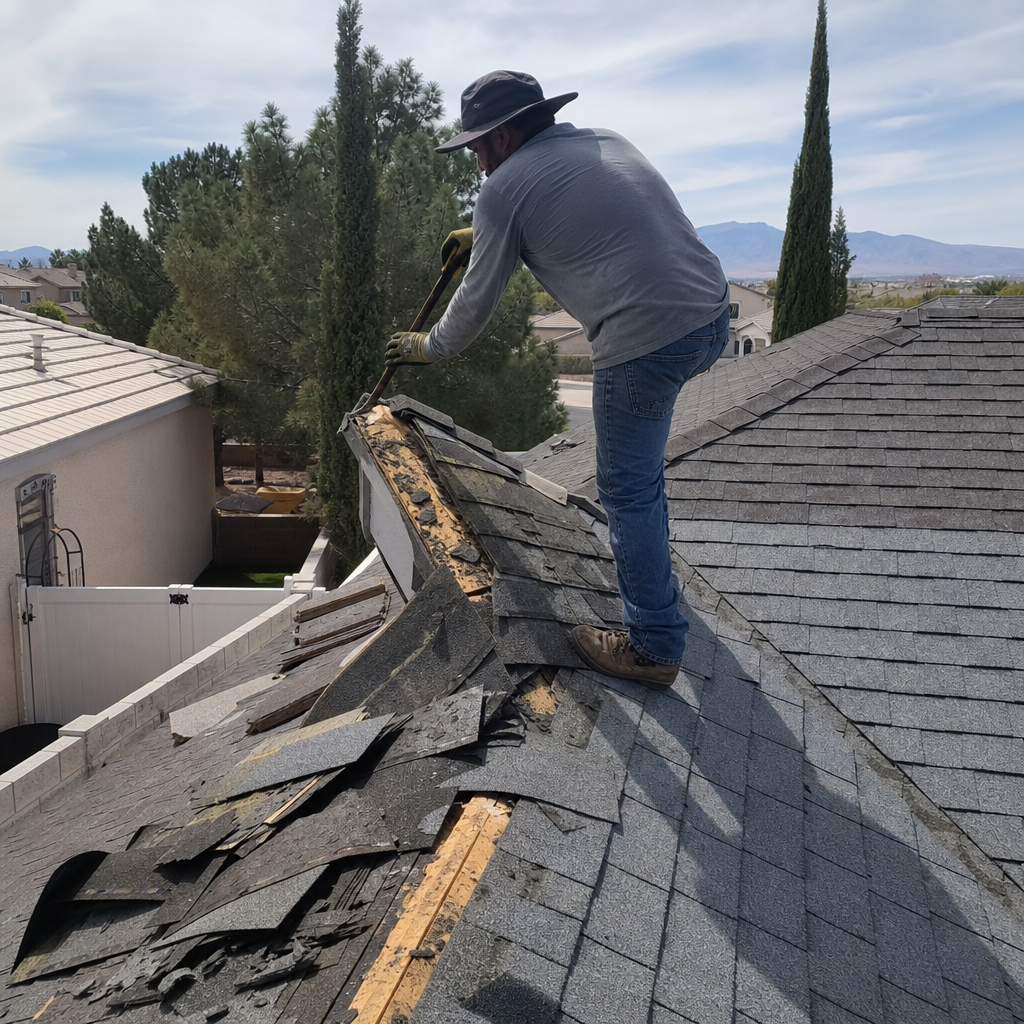
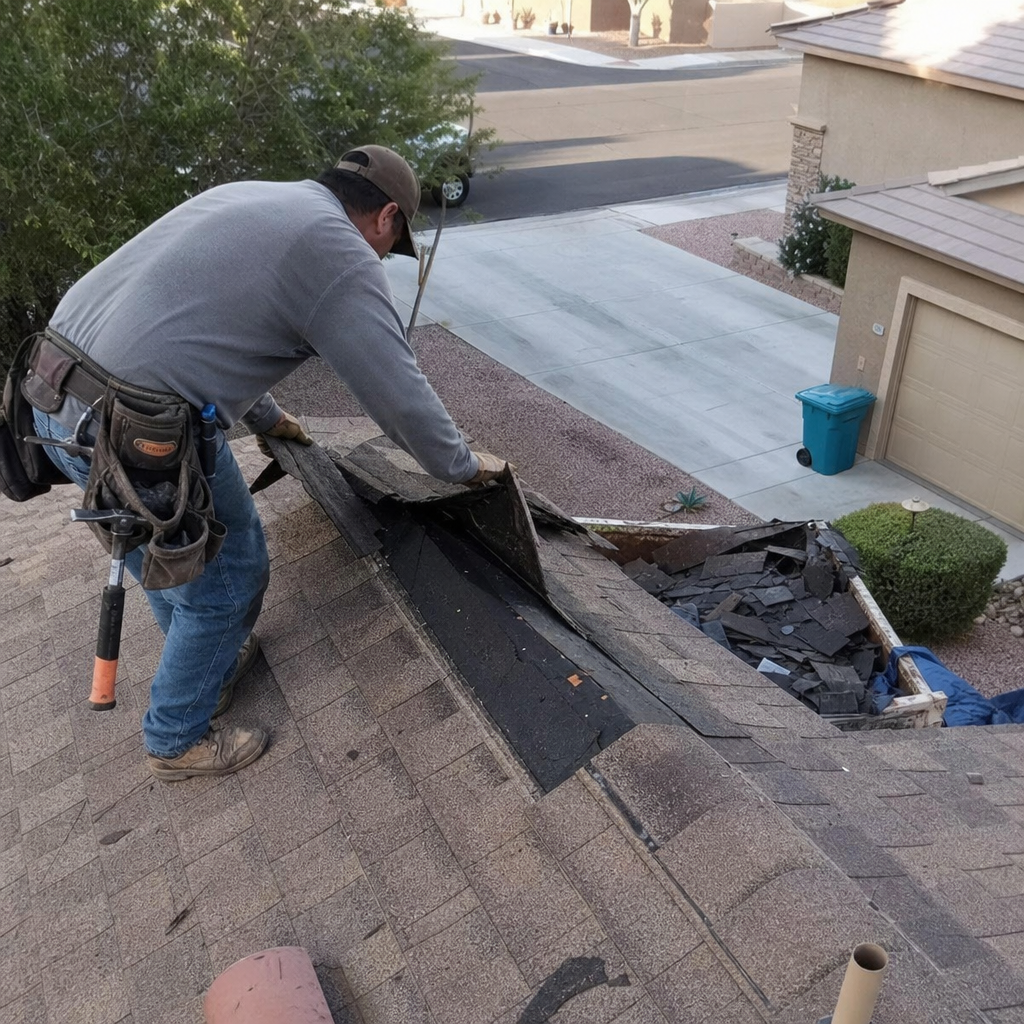
Emergency & Storm Damage in Spring Valley, NV
When a monsoon microburst rolls through Spring Valley at 2 a.m. and you’re watching a water stain spread across your ceiling, you don’t need a callback — you need a crew that knows this neighborhood, knows these roofs, and can be on-site fast. Our Emergency & Storm Damage team serves Spring Valley, NV, including ZIP code 89103, with same-day response to storm events. We’ve worked these streets long enough to know that a tile roof that looks fine after a monsoon often isn’t — and that distinction matters enormously here. Call us at (725) 500-0271 for an immediate assessment.
Why Pro Roof Care Solutions Las Vegas Is Spring Valley’s Preferred Emergency & Storm Damage Company
Jake Evans has been on residential roofs across Spring Valley for 16 years — not managing from an office, but physically on the ladder, probing underlayment, documenting damage scopes, and pulling permits through Clark County. When you call after a storm, the person who answers is the same person who’ll be standing on your roof that afternoon. That accountability is what 456 verified five-star reviews reflect, and a significant share of those reviews come from homeowners in Spring Valley’s 1980s and 1990s subdivisions who’ve dealt with exactly the kind of deceptive post-storm damage these roofs produce.
Response to Spring Valley is fast because we’re already in the corridor regularly. Homes along West Flamingo Road, the Buffalo Ranch area, and the subdivisions running off Bruce Woodbury Beltway are within our core service zone — not edge-of-map territory we reluctantly cover. When storm season runs July through September and microbursts can generate 60+ mph gusts with almost no warning, that proximity matters. We show up the same day, not three days later when the drywall is already saturated.
Our Emergency & Storm Damage Services in Spring Valley
Emergency Tarp Installation
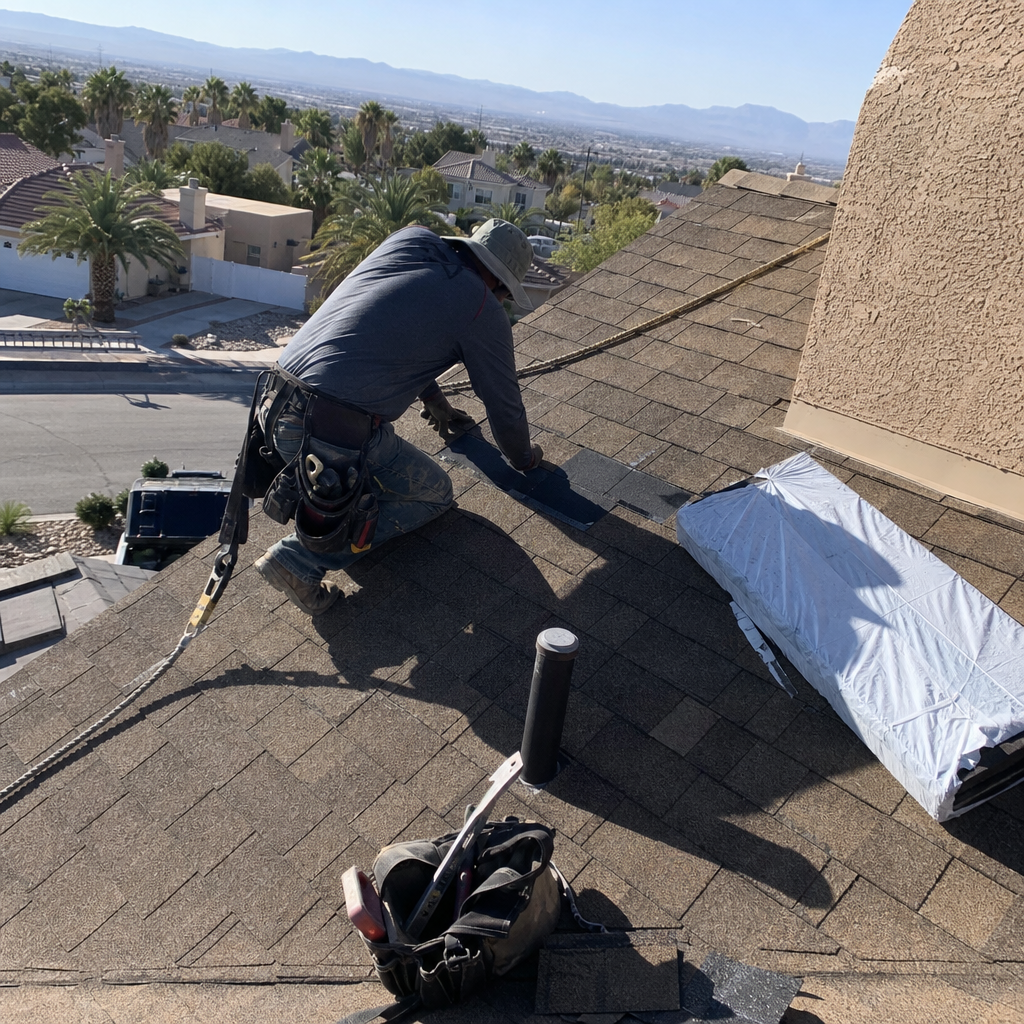
After a monsoon event, the first priority is stopping water entry before secondary damage compounds the repair bill. In Spring Valley’s Buffalo-area and Canyon Gate neighborhoods, where concrete tiles routinely survive a microburst visually intact while the underlayment beneath is paper-thin and oxidized, an emergency tarp is often the only thing standing between a roof inspection and a full interior gut. We carry commercial-grade tarps and can secure them across a full roof slope the same afternoon you call — not as a temporary thought, but as a properly weighted, properly sealed barrier that Clark County inspectors and insurance adjusters expect to see documented.

Storm Damage Repair
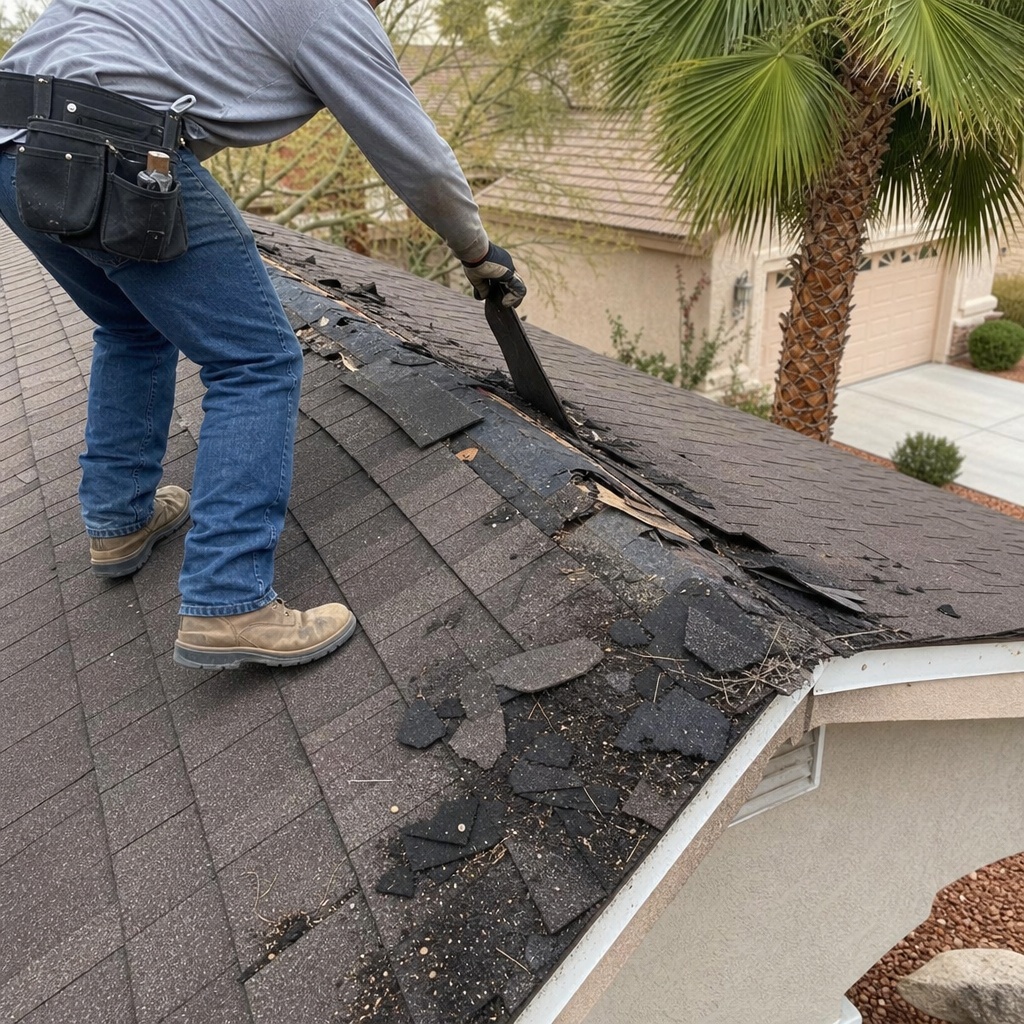
Spring Valley’s housing stock — primarily low-pitched concrete tile over wood-framed decks built from the late 1970s through the early 1990s — presents a repair challenge that catches less experienced crews off guard. The tiles themselves absorb the physical impact of hail and wind, but the real damage is invisible: flashings around penetrations and ridge caps that have oxidized after 15–30 years of roof-deck temperatures exceeding 150°F in summer. We scope storm repairs here with that failure pattern in mind, pulling up ridge sections and checking every unsealed void rather than simply resetting displaced tiles and calling the job done.

Insurance Claims Support
Filing a storm damage claim in Spring Valley carries a layer of complexity that doesn’t exist in many neighboring communities. If the damage scope triggers a tile re-roof, Clark County’s permit office requires full underlayment replacement and inspection documentation — you can’t simply relay existing tile and pass the final. We’ve coordinated dozens of scopes where the tiles themselves weren’t visibly broken but the adjuster’s initial estimate excluded underlayment replacement entirely. Jake Evans documents the underlayment condition with photos and probe measurements, presents the code requirement directly to the adjuster, and builds a supplement package that aligns with what Clark County will actually approve. That process protects your claim and keeps the repair code-compliant.

Wind & Hail Damage Assessment
The Mojave Desert’s monsoon season delivers wind and hail in short, intense bursts that stress-test every unsealed penetration on a roof that has spent 10 months bone-dry. In Spring Valley, where 40-year-old concrete tiles have been thermally cycling across extreme temperature swings for decades, even a moderate hail event can fracture tiles along pre-existing hairline stress cracks that were already present. We conduct grid-pattern inspections after wind and hail events, mapping every impact point and cross-referencing it against the underlayment condition beneath — because a cracked tile over dead underlayment is a water intrusion event waiting to happen, not a cosmetic repair.

What happens when you call
- 1
A real person answersNo phone trees — you reach a local pro.
- 2
You get an upfront price rangeHonest numbers before anyone is dispatched.
- 3
A background-checked tech heads outLicensed & insured, dispatched right away.
- 4
You approve before work beginsNothing starts until you say go.
The Spring Valley Problem No One Talks About: Tiles That Look Fine But Aren’t
After a July monsoon microburst tracked along West Flamingo Road and clipped the Buffalo Ranch neighborhood, our crew found a 1988 concrete-tile home where every ridge cap appeared seated and unbroken — nothing a homeowner walking the perimeter would have flagged. But our underlayment probe revealed completely oxidized, paper-thin felt across the entire west-facing slope, channeling storm water straight to the OSB deck below. There were no missing tiles. There was no visible impact damage. There was, however, active water intrusion that wouldn’t show up as a ceiling stain for another 48–72 hours.
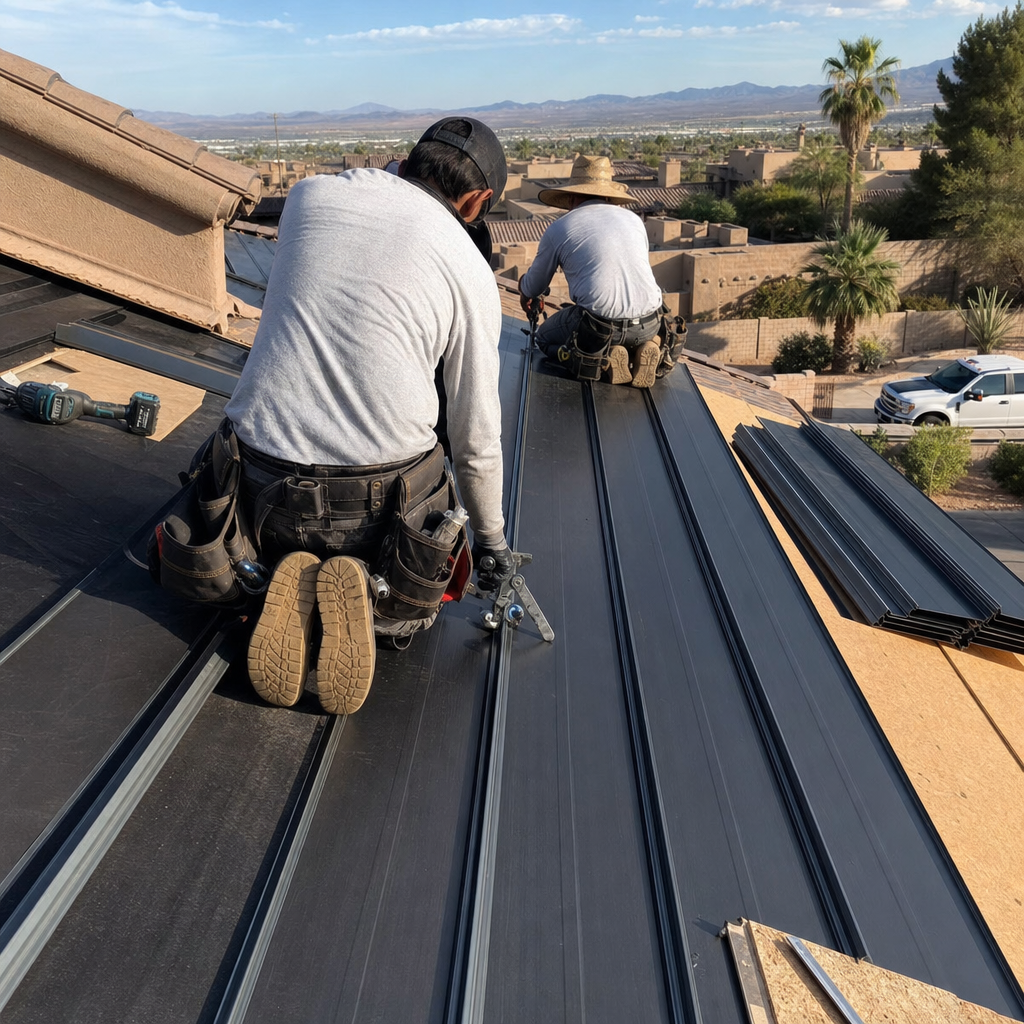
We emergency-tarped the west elevation that same afternoon, then coordinated a full underlayment replacement with Clark County inspection documentation before re-setting the original Boral tiles — satisfying both the county’s hard stance on underlayment permits and the homeowner’s insurance adjuster in a single documented scope. This is the defining failure pattern across Spring Valley’s residential stock: 30–50-year-old felt underlayment, destroyed by extreme UV and roof-deck heat, hidden beneath tiles that look completely intact. If your home was built in the 1980s or early 1990s in this part of the valley, a visual pass after a storm isn’t enough.
Trusted Brands We Service in Spring Valley
When storm damage repair or emergency underlayment replacement requires new materials, Spring Valley homeowners have real options — not a single-brand take-it-or-leave-it situation. We’re authorized to install and work with GAF, CertainTeed, Owens Corning, IKO, Atlas, Tamko, and Boral across the full range of roofing systems found in this area. Boral concrete tile is particularly relevant here given how much of Spring Valley’s 1980s housing stock was originally spec’d with it. We stock commonly needed components for Spring Valley’s prevalent roof types and source materials quickly when a full replacement scope is required, keeping repair timelines tight.
Common Emergency & Storm Damage Problems We See in Spring Valley Homes
- Visually intact concrete tiles hiding completely failed underlayment. Homes in Canyon Gate and the Buffalo-area subdivisions frequently show zero tile displacement after a monsoon microburst while the 30–50-year-old felt beneath has oxidized to a brittle shell. Water intrusion from these conditions often doesn’t appear as interior staining until 48–72 hours after the storm — by which point OSB decking has already absorbed moisture.
- Oxidized flashings at penetrations and ridge caps. Roof-deck temperatures in Spring Valley regularly exceed 150°F during summer, and asphalt-based flashings around vents, skylights, and ridge caps can fail in as little as 15 years under those conditions. Every unsealed void becomes an active water path the moment the first monsoon driving rain arrives — even if the tiles above it are perfectly seated.
- Membrane splits and drain blockages on flat commercial roofs along West Sahara and West Flamingo. The modified-bitumen systems on Spring Valley’s older strip centers and apartment complexes spend 10 months per year without significant rainfall, then absorb an intense microburst. Storm-driven debris blocks drains, standing water loads accelerate membrane splits, and what starts as a drain maintenance issue becomes a structural water damage event inside 24 hours.
- Clark County permit requirements that surprise homeowners mid-repair. Spring Valley homeowners who expect a simple emergency tile reset often discover mid-project that Clark County requires full underlayment replacement and inspection documentation before the final can pass. This isn’t a suggestion — it’s a code enforcement posture shaped by decades of storm-water claims tied to failed underlayment under visually intact tile. Not accounting for it upfront can stall an insurance claim and extend the repair timeline by weeks.
Pricing for Emergency & Storm Damage in Spring Valley, NV
Emergency service in Spring Valley runs on real numbers, not estimates that evaporate when the crew arrives. Here’s what to expect in this market:
- Emergency tarp installation: $350–$650 for a standard single-slope residential application; larger or multi-slope tarps on Spring Valley’s bigger 1980s tract homes typically run $600–$950.
- Storm damage inspection: Free — we document everything photographically for insurance purposes at no charge.
- Underlayment replacement (triggered by storm damage scope): $2,800–$6,500 depending on roof size and access; Clark County inspection fees are included in our quoted scope.
- Tile re-set and storm repair (localized): $450–$1,800 depending on the number of affected sections and flashing condition.
- Full storm damage repair with insurance coordination: $3,500–$9,000+ for whole-roof scopes on Spring Valley’s typical 1,600–2,400 sq ft tract homes.
What moves a number up: underlayment replacement scope, deck damage beneath the tile, flashing replacement at multiple penetrations, and permit fees. What keeps it lower: catching the damage early with a same-day tarp before moisture reaches the deck. Call (725) 500-0271 for a free on-site assessment — we’ll give you a written range before any work starts.
We Also Serve Cities Near Spring Valley
Our emergency storm damage response covers the full west Las Vegas corridor, not just individual ZIP codes. If you’re in Summerlin South, we serve that community as actively as Spring Valley — same response times, same Jake Evans-led crew, same Clark County permit process. Homeowners across these neighboring communities deal with identical monsoon exposure and similar 1980s–1990s housing stock, so our local knowledge transfers directly. Call (725) 500-0271 regardless of which side of the Beltway you’re on.
Serving Spring Valley, NV — Our Local Coverage Area
We’re based in the Spring Valley area and know this community well. Use the map below to see our service coverage — if you’re nearby, we can almost certainly help.
FAQs — Emergency & Storm Damage in Spring Valley
Yes — and this is the most important call you can make after a Spring Valley monsoon event. Concrete tiles on Canyon Gate and Buffalo-area homes routinely survive 60+ mph microbursts without a single displaced tile while the felt underlayment beneath has fully oxidized, meaning storm water is funneling directly to your OSB deck right now. Interior staining typically doesn’t appear for 48–72 hours after the event, by which point moisture has already penetrated the deck. A same-day inspection costs you nothing and catches a $4,000 deck repair before it becomes a $12,000 one. Call (725) 500-0271 — Jake Evans will give you a straight answer on what’s underneath.
It depends on the scope, but if the storm damage triggers a tile re-roof or underlayment replacement — which it frequently does on Spring Valley’s 30–50-year-old roofs — Clark County will require a permit, a full underlayment replacement, and an inspection before the final passes. This isn’t optional, and a contractor who tells you they can relay existing tile without pulling a permit is setting you up for a failed inspection and a stalled insurance claim. We handle the permit documentation as part of our standard storm repair process in Spring Valley. Call (725) 500-0271 to understand exactly what your repair scope will require before work begins.
Same day, in most cases. West Flamingo Road and the Buffalo Ranch area are well within our core service corridor, and we prioritize emergency tarp calls because every hour without a barrier is another hour of potential deck saturation. During active monsoon season — July through September — we stage materials specifically for this kind of response. Call (725) 500-0271 as soon as you identify potential damage and we’ll give you an arrival window immediately.
Yes, and this is exactly the type of supplement claim we help Spring Valley homeowners build. Insurance adjusters often write initial estimates around visible tile damage only, missing the failed underlayment beneath — but if the underlayment failure is storm-related or storm-exacerbated, and Clark County requires full replacement as a condition of the repair permit, that creates a documentable code-required scope that adjusters are obligated to consider. Jake Evans photographs every square foot of underlayment condition, documents the Clark County code requirement in writing, and presents a supplement package directly to your adjuster. Call (725) 500-0271 before you sign anything with your insurance company.
We work with seven major manufacturer lines — GAF, CertainTeed, Owens Corning, IKO, Atlas, Tamko, and Boral — giving you real material choice rather than whatever a single-brand shop happens to carry. Boral is particularly relevant for Spring Valley’s concrete-tile stock given how much of the original 1980s construction used it; we can match existing tile profiles and source replacements quickly when a storm-damaged section requires new material. The right brand for your repair depends on your existing roof system and what the insurance scope covers. Call (725) 500-0271 and we’ll match materials to your specific situation.
Reviewed by Jake Evans, Owner & Lead Technician at Pro Roof Care Solutions Las Vegas, serving Spring Valley, NV and the greater Las Vegas Valley since 2009.